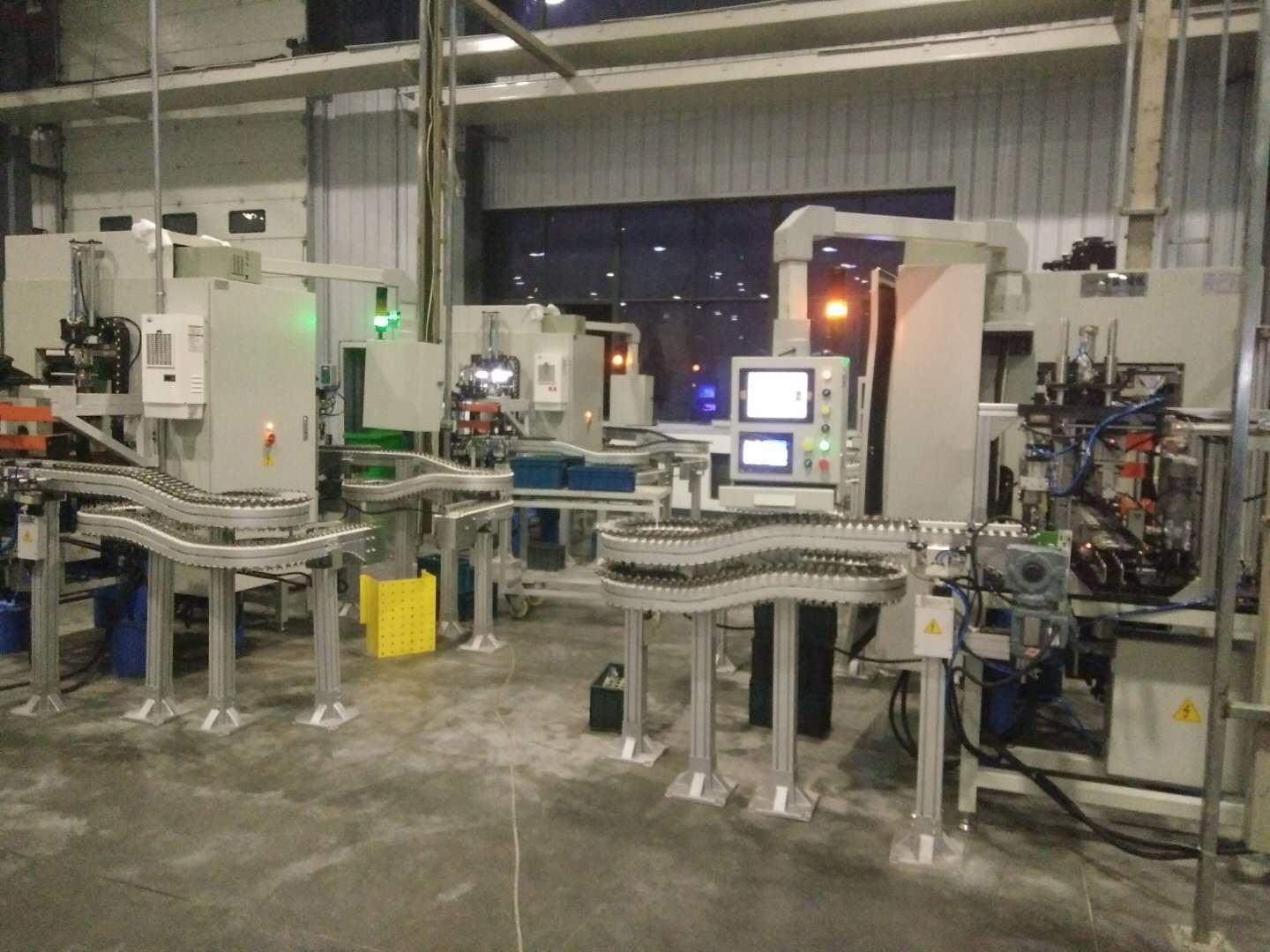
1. The computer calculates shaft bending from displacement sensor readings and determines the required correction stroke. Servo control provides a fast response. Automatic straightening software includes self-learning stroke control and wear compensation, adapting the ram stroke to the workpiece material and heat-treatment condition.
2. Measurement points can be used to plot a bending profile. The ram automatically moves to the maximum bend or another suitable correction position. Continuous incremental straightening helps limit springback and avoid overcorrection that could produce an S-shaped bend.
3. Depending on the workpiece, the software supports sectional measurement and straightening, spatial measurement and correction, continuous rapid incremental straightening and sequential correction. Parameters adapt automatically to actual runout to improve cycle time and correction accuracy.
This archived article describes Ruiming's automatic straightening technology, measurement methods, operator interface and automatic workpiece transfer. It states that machines within 250 tonnes use servo motors, while those above 250 tonnes use servo-hydraulic power, including machines above 1,000 tonnes. It also describes the use of imported precision components for quality and reliability. The historical 250-tonne boundary differs from current product information and requires verification; it is not a current configuration commitment.